
Daphne Theodorakopoulos, M.Sc.
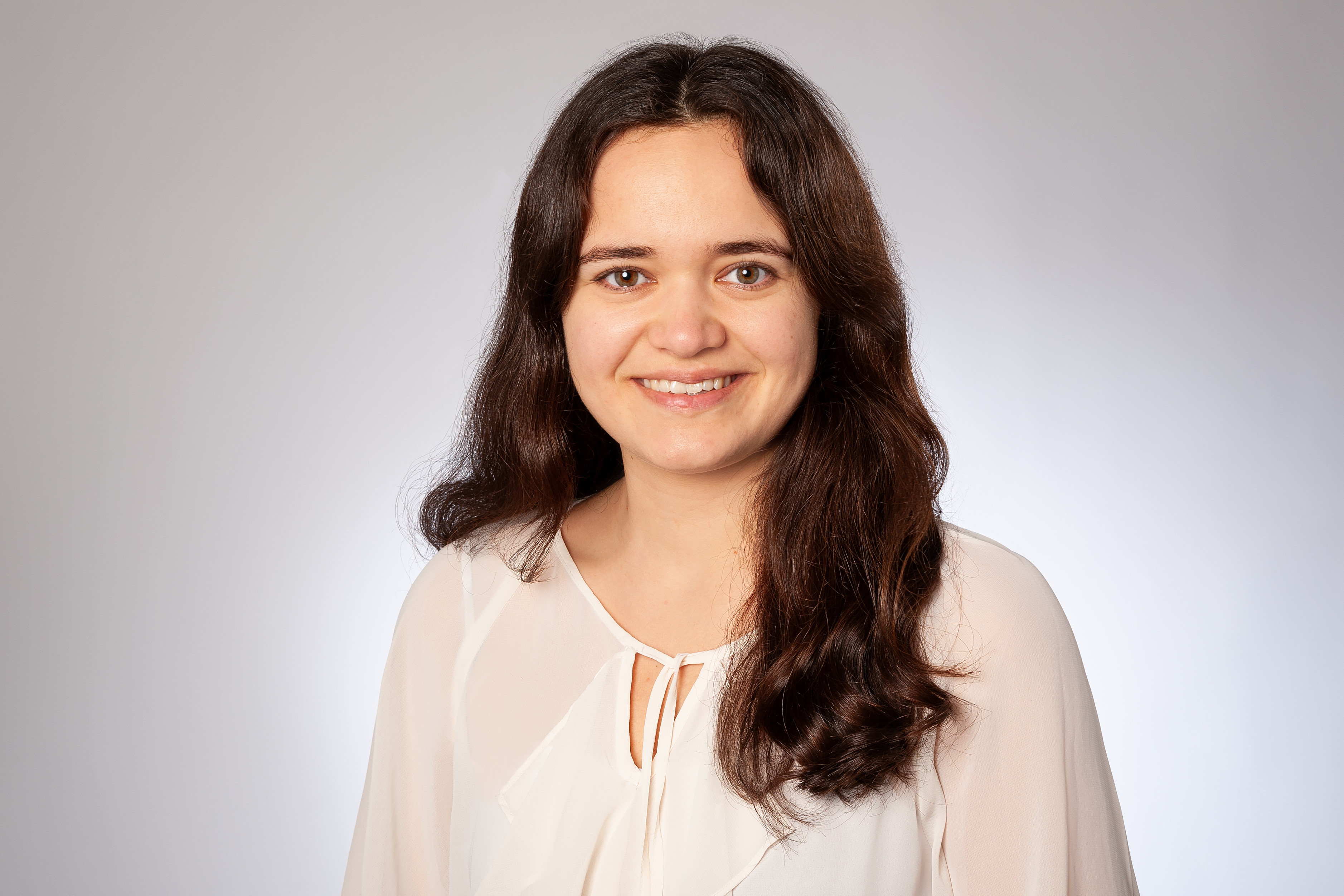
Daphne Theodorakopoulos, M.Sc.
Telefon
Adresse
Welfengarten 1
30167 Hannover
30167 Hannover
Gebäude
Raum
Daphne Theodorakopoulos, M.Sc.
Telefon
I am a PhD candidate at the AutoML Group. My research topic here is Green AutoML. I aim to make AutoML more sustainable.
Research Interests
- Green AutoML
- AI for Sustainability
Curriculum Vitae
-
Working Experience
2025 - present
Doctoral Researcher, Leibniz University of Hannover2022 - 2024
Researcher, DFKI Marine Perception2020 - 2022
Teaching Assistant, University of Twente (NL)2019
Internship Big Data & Advanced Analytics, Daimler AG2016 - 2018
Teaching Assistant, University of Hamburg -
Education
2023 - Present
PhD Student, Leibniz University Hannover2019-2022
Master of Science, Interaction Technology, University of Twente (NL)2015-2019
Bachelor of Science, Wirtschaftsinformatik, University of Hamburg
Publications
Zeige Ergebnisse 1 - 4 von 4
Theodorakopoulos D, Stahl F, Lindauer M. Hyperparameter Importance Analysis for Multi-Objective AutoML. in Proceedings of the european conference on AI (ECAI). 2024. S. 1100-1107 doi: 10.3233/FAIA240602, 10.48550/arXiv.2405.07640
Mehr...
Tornede A, Deng D, Eimer T, Giovanelli J, Mohan A, Ruhkopf T et al. AutoML in the Age of Large Language Models: Current Challenges, Future Opportunities and Risks. Transactions on Machine Learning Research. 2024 Feb 9. Epub 2024 Feb 9. doi: 10.48550/arXiv.2306.08107
Mehr...
Theodorakopoulos D, Manß C, Stahl F, Lindauer M. Green-AutoML for Plastic Litter Detection. in Proceedings of the ICLR Workshop on Tackling Climate Change with Machine Learning. 2023
Mehr...
Tavanapour N, Theodorakopoulos D, Bittner EAC. A conversational agent as facilitator: Guiding groups through collaboration processes. in Zaphiris P, Ioannou A, Hrsg., Learning and Collaboration Technologies. : Human and Technology Ecosystems - 7th International Conference, LCT 2020, Held as Part of the 22nd HCI International Conference, HCII 2020, Proceedings. Springer. 2020. S. 108-129. (Lecture Notes in Computer Science (including subseries Lecture Notes in Artificial Intelligence and Lecture Notes in Bioinformatics)). doi: 10.1007/978-3-030-50506-6_9
Mehr...